

The best water to clean solar panels with is Deionised water, often abbreviated as DI water, should be used to clean solar panels. It is water that has had almost all of its mineral ions removed, such as cations like sodium, calcium, iron, and anions like chloride and sulphate. The process of deionization involves passing water through ion exchange resins or membranes that selectively remove ions from the water.
Deionised water is commonly used in laboratories, industrial settings, and some specific applications where the presence of minerals or ions could interfere with processes or reactions.
It’s also used in some household appliances like steam irons and humidifiers to prevent mineral buildup.
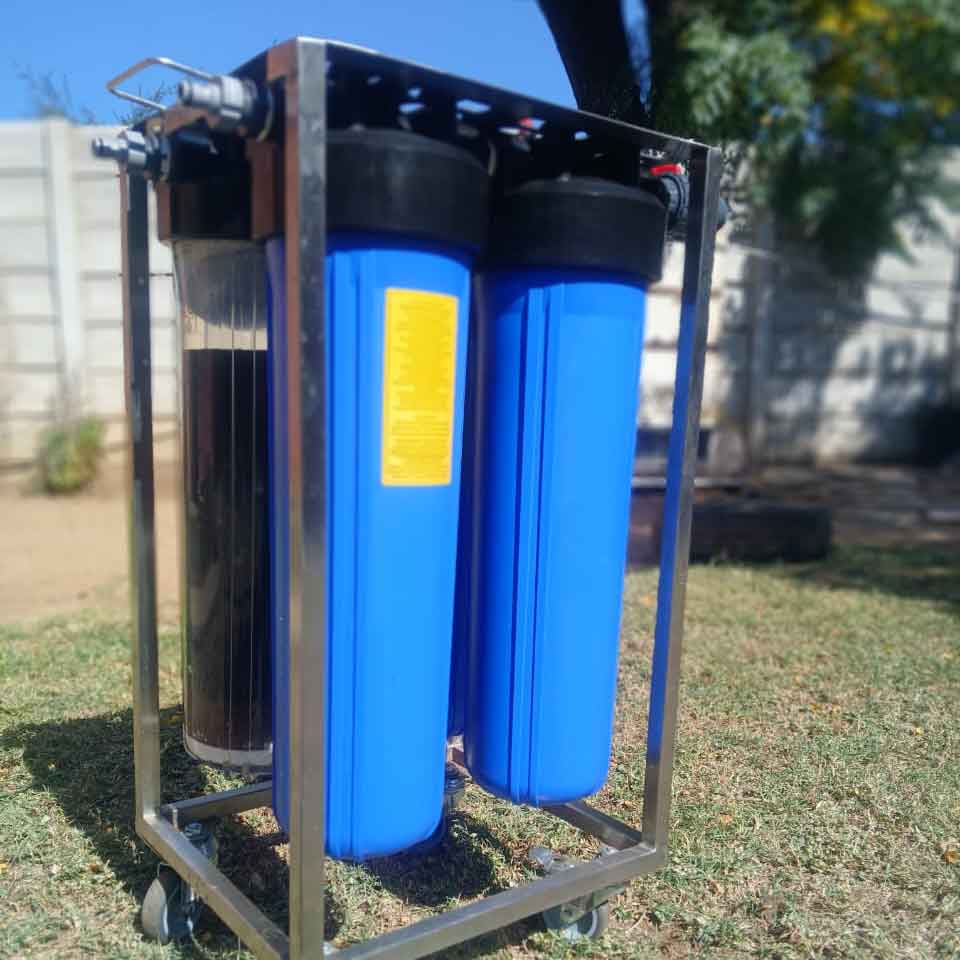
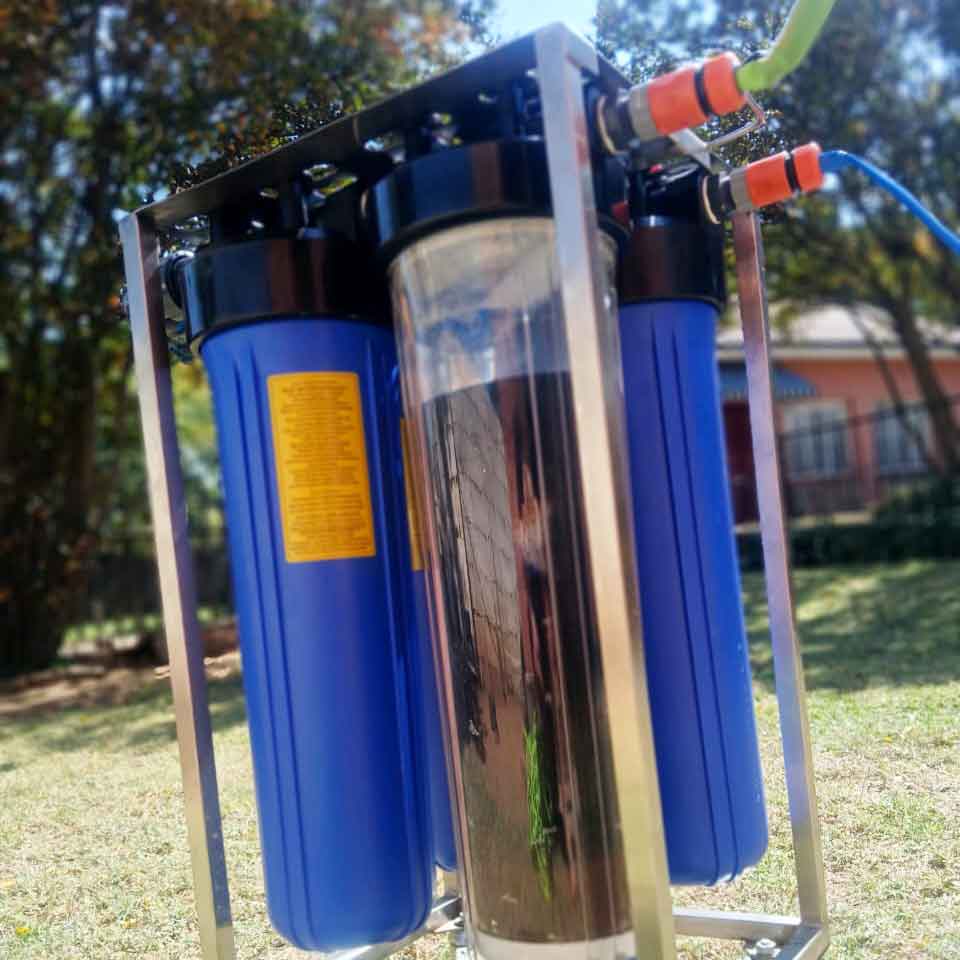
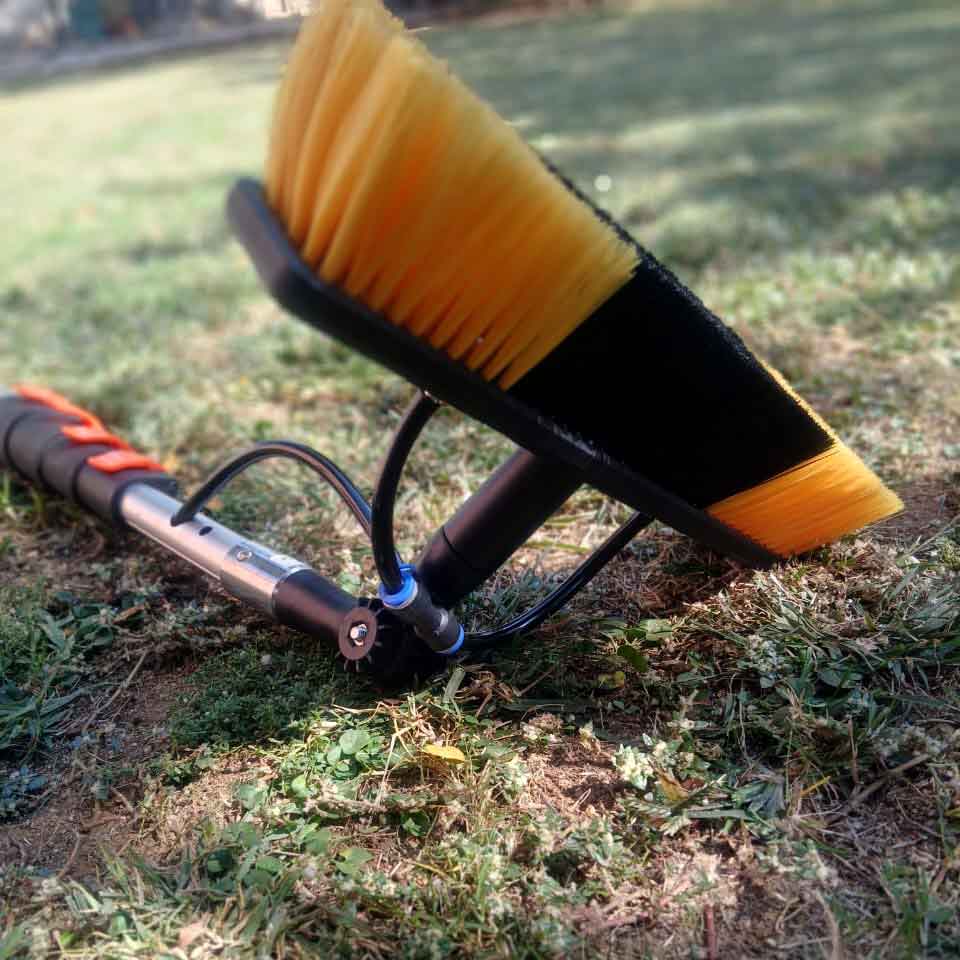
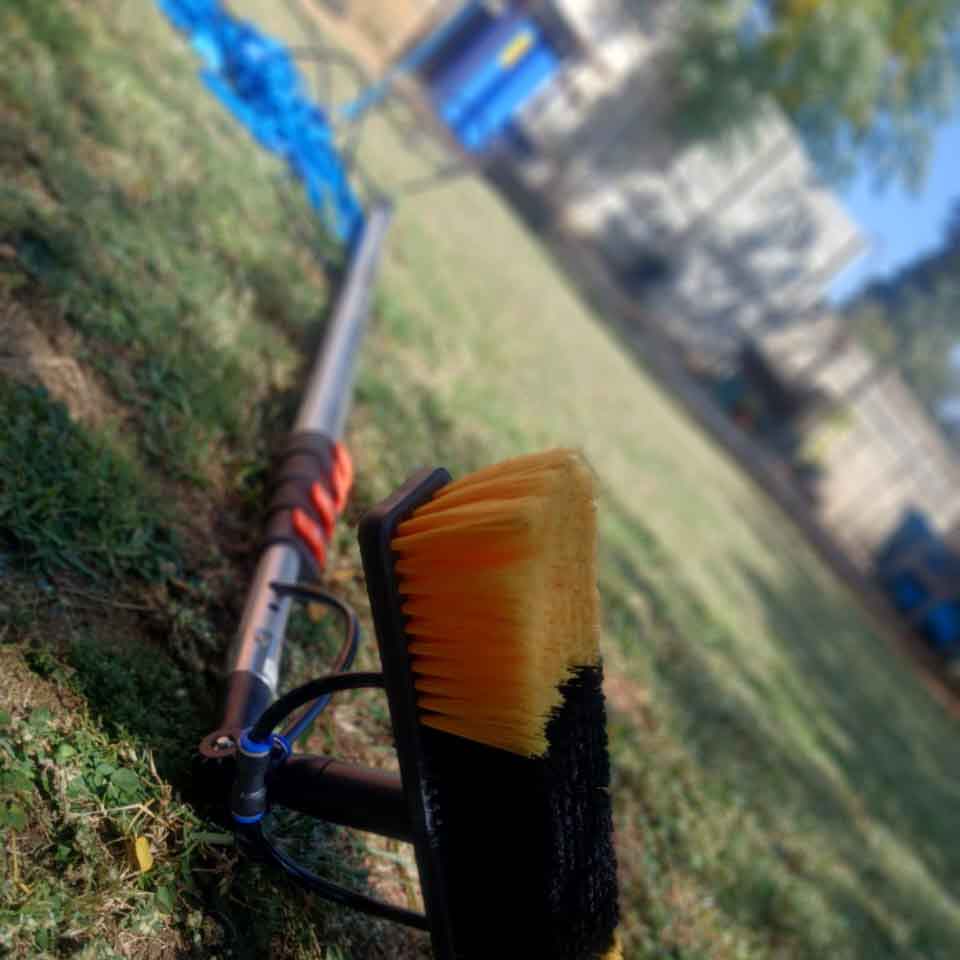
Our deionising filters we use to make sure the water applied to your panels is of the highest purity. And soft-bristle, water-fed brushes to ensure no mechanical damage occurs.
Protection of the panel’s anti reflective coating: The anti-reflective coating (ARC) on solar panels is a thin layer applied to the surface of solar photovoltaic (PV) modules to reduce the amount of sunlight that reflects off the panel’s surface. This coating is typically made of materials with specific optical properties that minimise reflection and maximise the amount of light absorbed by the solar cells.
The primary purpose of the anti-reflective coating is to improve the overall efficiency of the solar panel by increasing the amount of sunlight that can be converted into electricity. When sunlight hits the surface of a solar panel, some of it is reflected back into the atmosphere, reducing the amount of light available for electricity generation.
By reducing reflection, the anti-reflective coating allows more light to penetrate the solar panel and reach the solar cells, thus increasing the electricity output. Anti-reflective coatings are typically designed to minimise reflection across a broad range of wavelengths, including the visible spectrum and the near-infrared spectrum, where most of the sunlight’s energy is concentrated.
These coatings are engineered to have a refractive index that is intermediate between that of air and the solar panel material, which helps to reduce reflection by minimising the contrast in refractive index at the panel’s surface.
In addition to improving the efficiency of solar panels, anti-reflective coatings can also enhance their aesthetic appearance by reducing glare and improving the uniformity of light absorption across the panel’s surface. This can be particularly important for architectural applications where solar panels are integrated into buildings or structures. Overall, the anti-reflective coating is an essential component of solar panels that helps to maximise their performance and energy production, contributing to the widespread adoption of solar energy as a clean and renewable source of electricity.
Lower rate of induced degradation: Induced degradation in solar panels refers to a reduction in the performance or efficiency of solar photovoltaic (PV) modules caused by external factors or stresses.
These stresses can include mechanical stress or abrasion, environmental conditions, manufacturing defects, or improper handling during installation or operation. Induced degradation is distinct from “inherent degradation,” which refers to the natural ageing process of solar panels over time.
No. Tap water is considered “impure” or “hard”
in comparison to purified water like distilled water or Deionised water due to its mineral content and potential presence of contaminants (Especially in Johannesburg). Here are a few reasons why tap water is generally considered impure:
Mineral content
Tap water often contains minerals like calcium, magnesium, sodium, and potassium, which are dissolved as the water passes through soil and rocks. While these minerals are not harmful to health and can even be beneficial, they can affect the taste and appearance of water, and in some cases, may cause scaling in pipes and appliances.
Contaminants
Tap water can contain various contaminants depending on its source and treatment process. These contaminants may include microbes (such as bacteria and viruses), chemicals (such as chlorine, fluoride, pesticides, and industrial pollutants), heavy metals (such as lead, arsenic, and mercury), and other substances that can pose health risks if present in high concentrations.
Treatment
Although tap water undergoes treatment processes to make it safe for consumption, these processes may not completely remove all contaminants. For example, while chlorine is added to disinfect tap water and kill harmful microorganisms, it can react with organic matter in the water to form disinfection byproducts (DBPs), some of which are potentially carcinogenic.
Distribution system
Tap water can pick up contaminants as it travels through pipes and distribution systems on its way to consumers’ taps. Ageing infrastructure, corroded pipes, and cross-contamination can all contribute to the presence of impurities in tap water.
The hardness of water can have various effects on household and industrial applications, such as:
Scaling
The minerals present in hard water can form scale deposits on solar panels, plumbing fixtures, water heaters, and appliances, reducing their efficiency and lifespan.
Soap Scum
Hard water can react with soap to form a sticky residue known as soap scum, which can accumulate on surfaces, dishes, and laundry, reducing cleaning effectiveness.
Reduced lathering
Hard water can interfere with the lathering of soap and detergents, requiring the use of larger amounts of cleaning agents to achieve the desired results.
Skin and hair irritation
Some people may experience skin dryness, irritation, or dull hair when washing with hard water.